


How to Keep Your Dog Off the Couch
Teach your dog to stay off the couch using positive reinforcement, consistency, and expert training tips. Learn practical methods that work.
Invisible Fence Brand
Published 4/23/2025
Updated 10/21/2026
Choose your location
To make sure you're seeing the correct availability and pricing for products and services, please choose your location:
Please select your local dealer
So that we can provide you with accurate information and subscription options for your area.
Teach your dog to stay off the couch using positive reinforcement, consistency, and expert training tips. Learn practical methods that work.
Invisible Fence Brand
Published 4/23/2025
Updated 10/21/2026
Sharing the couch with your dog can be cozy, but it's perfectly okay to establish furniture-free zones in your home. Whether you're protecting your furniture, managing shedding, or simply creating household boundaries, the key is training your dog consistently and giving them a comfortable alternative.
Before starting training, it helps to understand why dogs are drawn to furniture in the first place. Couches offer warmth, comfort, elevation, and proximity to the people they love most. For many dogs, the couch simply feels like the best seat in the house.
The good news? Dogs can learn where they're welcome and where they're not, as long as the rules are clear and consistent.
Select a simple cue word such as "off" whenever your dog jumps onto the couch. Use the same word every time.
“Inconsistency is the challenge of training any behavior.” Georgia Welch, Invisible Fence® Brand Regional Trainer said. “Choose one word and enforce it, like ‘off’ or any word that means all four feet on the ground.”
Avoid using words that may already have another meaning. For example, many dogs learn "down" as a command to lie down, which can create confusion.
When your dog gets off the couch and settles on the floor or in their own bed, offer praise, affection, or treats. Rewarding desired behavior helps your dog understand exactly what earns positive attention.
Rather than simply removing access to the couch, provide a place your dog enjoys even more. Consider:
Dogs are much more likely to choose their designated space when it feels rewarding and comfortable.
The biggest obstacle to success often isn't the dog. It's inconsistent household rules.
If one person allows couch access while another doesn't, training becomes confusing. Make sure everyone in the home follows the same expectations.
Whenever your dog jumps on the couch, calmly guide them off and redirect them to their designated place. Consistent repetition helps build lasting habits.
Many pet owners unintentionally slow training progress by:
Successful training happens through repetition, patience, and clear expectations.
It's much easier to prevent a behavior from developing than it is to change an established habit.
Many families allow puppies on furniture because they're small and adorable, only to change the rules when the dog grows larger. While adult dogs can certainly learn new boundaries, it typically takes more time and consistency to break an existing habit.
If your long-term goal is furniture-free living, it's best to establish those expectations early.
Some dogs benefit from additional training support when owners aren't home to supervise.
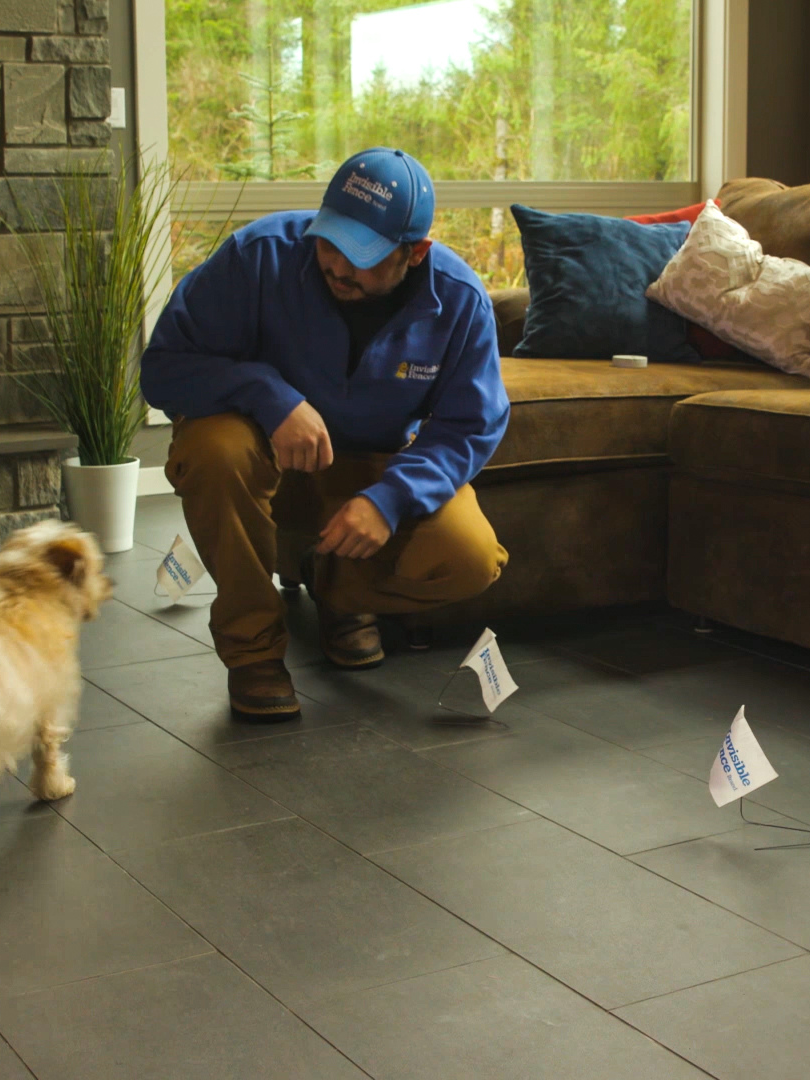
Tools such as the ScatMat® indoor pet training mat or Invisible Fence® Brand indoor protection solutions can help reinforce established boundaries while training is in progress.
These solutions work best when combined with consistent instruction, positive reinforcement, and a comfortable alternative space for your dog.
Every dog learns at a different pace, but clear expectations and consistent reinforcement can make a significant difference.
If you're struggling to establish furniture boundaries or other household manners, professional guidance can help accelerate the process. Invisible Fence® Brand's Manners Obedience Training program provides personalized instruction to help pets and families build healthy habits and lasting success.