
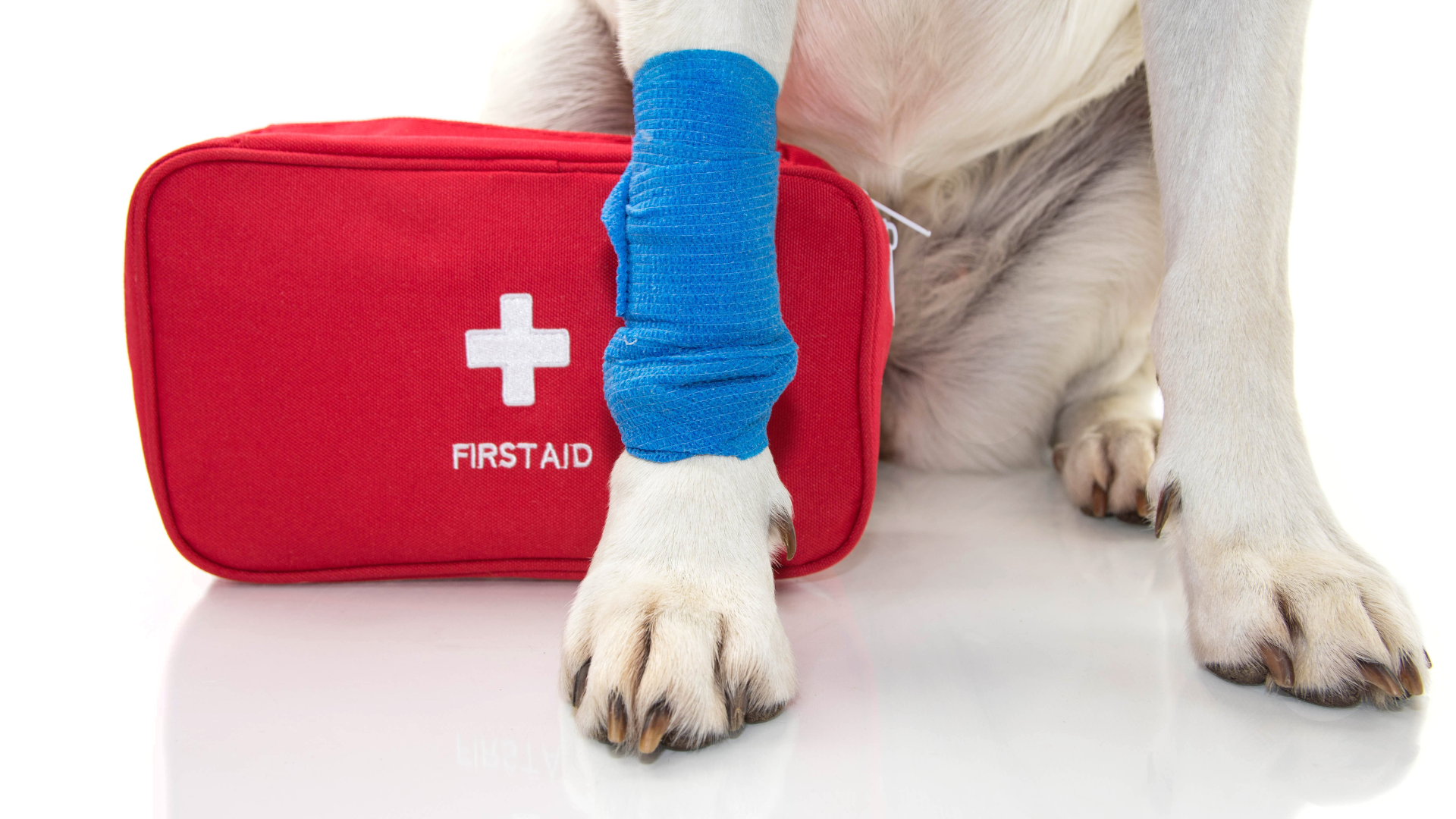
Dog First Aid Kit: The Complete Checklist Every Dog Owner Needs
Learn exactly what to put in a dog first aid kit, when to use each item, and how to handle emergencies safely.
By Invisible Fence Brand
Published 12/13/2024
Updated 3/18/2026
Dog First Aid Kit: What Every Dog Owner Should Have at Home & On the Go
A well-prepared dog first aid kit helps you respond quickly when minor injuries or health concerns arise. Whether you’re at home, traveling, hiking, or simply out for a walk, having the right supplies within reach can make a stressful situation more manageable.
In this guide, we will cover:
- Why every dog owner should keep a dog first aid kit on hand.
- What to put in a dog first aid kit, organized into clear categories.
- How and when to use essential first aid supplies safely.
- Which situations you can stabilize at home, and when to seek immediate veterinary care.
- How to build a dog emergency kit for travel and outdoor adventures.
- Whether a pre-made pet first aid kit or a customized version is right for you.
- How to store and maintain your supplies so they’re ready when needed.
This article is designed to give you clear, practical guidance without replacing professional medical advice. First aid for dogs focuses on temporary stabilization. Veterinary care is still essential for diagnosis and treatment.
By understanding what belongs in a dog first aid checklist and how to use those items responsibly, you can feel more prepared and confident in unexpected situations.
H2: Why Every Dog Owner Needs a First Aid Kit
Emergencies never happen at convenient times. For many dog owners, even a small injury can feel overwhelming if you are not prepared. A properly stocked dog first aid kit allows you to respond quickly, reduce panic, and provide immediate stabilization until you can reach a veterinarian.
Dogs are active, curious, and often unaware of environmental hazards. Small cuts from sharp objects, broken nails from rough surfaces, insect stings during outdoor time, or mild gastrointestinal upset are situations most dog owners will eventually encounter.
A dog emergency kit is not a replacement for professional veterinary care. Instead, it provides the tools to temporarily manage injuries, control bleeding, clean minor wounds, or support your dog through mild symptoms while you arrange medical evaluation. First aid for dogs focuses on stabilization, not diagnosis. The goal is to protect your dog’s well-being until professional treatment is available.
When emergency supplies for dogs are organized and ready, you are less likely to inadvertently delay care or make rushed decisions. Understanding what to put in a dog first aid kit, and when to use each item, helps you act confidently in unexpected situations.
Dog First Aid Kit Checklist (Quick Reference)
Bandaging & Wound Care
- Gauze pads
- Self-adhering bandage wrap
- Adhesive tape
- Non-stick sterile pads
- Antiseptic solution
- Antibiotic ointment
Tools
- Blunt-tip scissors
- Tweezers
- Digital thermometer
- Muzzle
- Styptic powder
- Needleless syringe
- Tick remover
Medications (Consult Your Vet Based on Each Dog’s Needs)
- Diphenhydramine (Benadryl)
- Probiotic
- Glucose syrup
- Sterile saline wash
Emergency & Safety Items
- Emergency contact list
- Leash
- Towel
- Emergency blanket
- Gloves
Essential Dog First Aid Supplies Explained
Bandages & Wound Care
Gauze Pads
Gauze pads are helpful when applying direct pressure to minor cuts and absorbing blood. They are used to slow mild bleeding and protect wounds from contamination while you assess the situation.
Self-Adhering Bandage Wrap
This flexible wrap holds gauze securely in place without sticking to fur. A bandage should be snug enough to remain secure, but not tight enough to restrict circulation. Watch for signs of restricted circulation like swelling, cold paws, or discoloration below the wrap.
Adhesive Tape
Medical tape reinforces dressings and keeps bandages from slipping. It should always be applied over padding rather than directly onto fur or skin.
Non-Stick Sterile Pads
Non-stick sterile pads protect scrapes and minor wounds without adhering to the injury. This makes bandage changes more comfortable and reduces irritation.
Antiseptic Solution
A veterinarian-approved antiseptic solution gently cleans minor wounds and helps reduce bacteria. Widely used dog first aid kit antiseptics include, diluted chlorhexidine or povidone-iodine solutions.
Some human antiseptics may contain similar active ingredients, but not all formulations are appropriate for dogs.
Avoid using hydrogen peroxide on open wounds unless directed by your veterinarian, as it can damage healthy tissue and delay healing. When possible, choose a product labeled for veterinary use and consult your veterinarian if you are unsure about a specific antiseptic.
Antibiotic Ointment
A thin layer of pet-safe antibiotic ointment may help protect minor cuts from infection.
Some human antibiotic ointments may be used in dogs, but certain formulations contain added ingredients that are not appropriate for pets.
Neosporin for example, is safe for use on pets. However, be sure to select the Neosporin original formula with no additives or pain medication.
Tools Every Kit Should Include
Blunt-Tip Scissors
Blunt-tip scissors allow safe trimming of fur around a wound and cutting of bandage materials without risking additional injury.
Tweezers
Tweezers help remove small splinters or visible debris from superficial wounds. If an object appears deeply embedded or your dog reacts strongly, do not attempt removal without veterinary guidance.
Digital Thermometer
A rectal digital thermometer provides the most accurate temperature reading for dogs.
Standard human digital thermometers can be used for pets, but they should be reserved exclusively for your dog once designated for that purpose. Always clean the thermometer thoroughly after use. Look for online tips from professionals or consult your veterinarian if you are unsure how to safely take your dog’s temperature.
Muzzle
Even well-trained dogs may bite when in pain. A properly fitted muzzle protects both you and your dog while providing first aid.
Injured dogs may behave unpredictably. Always prioritize safety and discontinue first aid if your dog shows signs of escalating distress.
Styptic Powder
Styptic powder helps control minor bleeding from broken nails or small cuts. Apply directly to the affected area using gentle pressure.
Pet-specific styptic powders are recommended because they are formulated for animal use. Some human styptic products may contain similar ingredients but always review labels carefully and consult your veterinarian before substituting products. If bleeding does not stop quickly, seek veterinary care.
Needleless Syringe
A needleless syringe is useful for flushing wounds with sterile saline or administering liquids when recommended by your veterinarian.
Tick Remover Tool
A tick remover tool is designed to extract ticks cleanly without squeezing the body, reducing the chance of leaving parts of the tick embedded in the skin.
Medications to Include
Medications in a dog emergency kit should only be included after consulting your veterinarian.
Diphenhydramine (Benadryl)
Diphenhydramine may be recommended in certain allergic reactions. Some human formulations may be appropriate for dogs, but not all products are safe, especially those combined with additional active ingredients. Check with your vet on proper dosage based on your pet’s health and weight.
Probiotics and Digestive Support
Probiotics may support mild digestive upset temporarily. Dogs have different digestive systems than humans, and bacterial strains used in human supplements may not be appropriate for pets. If GI issues persist, consult your veterinarian.
Glucose Syrup
Glucose syrup may be used in certain low blood sugar situations, particularly in small breeds. While some household glucose products may appear similar, not all are formulated for safe veterinary use.
Sterile Saline Wash
Sterile saline wash is used to flush debris from eyes or gently clean minor wounds.
Plain sterile saline solutions without added medications or preservatives are generally safe for dogs. Avoid contact lens solutions that contain cleaning agents or additives. When possible, choose sterile saline labeled for medical or veterinary use.
When to Use Your Dog First Aid Kit or Go to the Vet Immediately
Minor Issues You Can Stabilize at Home
- Small cuts
- Broken nails
- Mild diarrhea
- Minor insect stings
These minor concerns may be stabilized using your dog first aid kit. For example, applying pressure to a small cut, using styptic powder on a broken nail, or monitoring mild digestive upset while providing supportive care can help prevent escalation.
Continue monitoring your dog closely. If symptoms persist, worsen, or are accompanied by additional concerns such as lethargy or vomiting, contact your veterinarian right away.
Go to the Vet Immediately If Your Dog Has:
- Uncontrolled bleeding
- Difficulty breathing
- Heatstroke symptoms (excessive panting, thick drooling, bright red/purple gums, vomiting, diarrhea, disorientation)
- Seizures
- Suspected poisoning
- Broken bones
- Severe eye injuries
These conditions require immediate professional veterinary care. A dog first aid kit is intended only for temporary stabilization while you arrange emergency treatment.
How to Modify Your Dog First Aid Kit for Travel, Hiking & Camping
Outdoor activities introduce additional risks such as rough terrain, temperature changes, wildlife encounters, and limited access to veterinary care. A travel-ready dog emergency kit should include core supplies from your home kit plus additional items for outdoor conditions.
Consider including:
- Tick remover
- Extra water
- Paw protection
- Emergency blanket
- Slip lead
Extra water helps prevent dehydration. Paw protection can reduce injury on hot pavement or rocky trails. An emergency blanket helps maintain body temperature if your dog becomes wet or exposed to cold conditions.
Travel kits should be lightweight, waterproof, and easily accessible. Review your dog first aid checklist before each trip to ensure all supplies are stocked and ready.
Should You Buy a Pre-Made Dog First Aid Kit or DIY?
Pre-made pet first aid kits offer convenience and portability. They typically include basic bandaging materials and essential tools organized in a compact container. For many dog owners, a pre-made kit can be a practical starting point.
However, commercial kits may not include dog-specific medications or items recommended by your veterinarian. They may also lack sufficient quantities of certain supplies.
Building your own dog first aid kit allows you to tailor contents to your dog’s breed, age, size, medical history, and lifestyle. For example, an active hiking dog may need more paw protection supplies, while a small breed with a history of digestive sensitivity may require veterinarian-approved supplements.
If purchasing a pre-made dog emergency kit, compare it against the comprehensive checklist above. Add any missing items recommended by your veterinarian to ensure your kit meets your individual needs.
How to Store & Maintain Your Dog First Aid Kit
Proper storage ensures your dog’s first aid kit remains effective when needed. Be sure to use a waterproof container to protect supplies from moisture and damage. Clearly label it and make sure other family members know the location of the container so it is easy to locate in an emergency.
Many owners keep one kit at home and another in their vehicle. This ensures emergency supplies are accessible whether you are at home or traveling.
To be sure your dog first aid kit is always ready, set a reminder to review your kit at least twice a year. During maintenance:
- Replace expired medications
- Restock used bandages or gauze
- Inspect tools for wear/cleanliness
- Update emergency contact numbers
Regular maintenance keeps your dog emergency kit reliable and ready.
Frequently Asked Questions
What should be in a dog first aid kit?
A dog first aid kit should include bandaging materials, wound care supplies, basic tools, veterinarian-approved medications, and emergency contact information. The checklist above outlines essential items every owner should consider.
Can I use human first aid supplies on my dog?
Some human supplies, such as gauze and sterile saline, may be appropriate for dogs. However, medications and certain antiseptics should only be used if approved by your veterinarian.
Is Benadryl safe for dogs?
Diphenhydramine may be safe for some dogs, but not all. Dosages are typically based on animal weight. Always confirm dosage and safety with your veterinarian before administering medication.
How do I treat a bleeding paw?
Apply steady pressure using clean gauze for several minutes. If bleeding does not stop or appears severe, seek veterinary care immediately.
What temperature is a fever in dogs?
A normal temperature for dogs typically ranges between 101°F and 102.5°F. Temperatures above this range may indicate a fever and require veterinary evaluation.
Should I keep a dog first aid kit in my car?
Yes. Keeping a dog first aid kit in your vehicle ensures you are prepared during travel, hikes, or unexpected situations away from home.
Conclusion
A properly prepared dog first aid kit allows you to respond quickly when minor injuries occur. While first aid for dogs provides temporary stabilization, it does not replace veterinary care.
Review this dog first aid checklist carefully and customize your kit in consultation with your veterinarian. Preparation reduces panic, and helps protect your dog’s health when emergencies arise.